Monday, August 19, 2019

Presidential Elections’ Effects on the Markets

Presidential Elections’ Effects on the Markets


Quick Market Note:  The markets have been volatile this week.  These are short term, temporary fluctuations that have been happening on and off for a hundred years.  And it always works out in the end. 
Moving on....
I get a ton of questions from readers. Luckily, I have lots of good answers! Today, I am going to share a few of the most common questions and my answers. 

Question #1: Do presidential elections affect the stock market? 

While the election is still a little over a year away, I still sit down with skittish and concerned investors at least once a week. So what is it? Do presidential elections make the markets go up? Down? Is it better if a Republican is elected, as opposed to a Democratic administration? Do markets generally go up or down before an election? What about after the election?
There are actually several academic studies on the subject. Going all the way back to George Washington, the trend is remarkably clear. In fact, presidential elections have had the same effect on the markets for hundreds of years.
So, in the end, what is the answer? What kind of effect does an election year have on your investments?
None. Literally. 
There is no correlation between presidential elections and the stock market. There might be some elevated volatility, but from a long-term perspective, no one can find any positive or negative connection between presidential elections and the stock market. Strong capitalist economic systems have shown incredible resilience under all presidential administrations, be it Martin Van Buren or Millard Fillmore. 
By the way, during the presidency of Chester A. Arthur in 1886, the Dow Jones Industrial Average was at 30 points. Yesterday the Dow Jones closed at over 25,000.

Question #2: How do you know that the stock market will continue to average around 10% per year?

Some people accuse me of being an optimist, but I prefer to look upon myself as a realist. For 240 years people have been betting against America and for 240 years they have been wrong.
But the American economy has reached its limit. The last century may have been great, but most of the innovation has already occurred.... 
It's like when your dad told you that music was doomed after Elvis Presley, or how you said the same thing to your kids except your reference was The Beatles. We have been doomsdaying the economy for centuries. And we've been wrong every time.  
Here’s some perspective. There have been more improvement to the human condition in the past century than all the previous centuries combined since man first appeared on the Earth.
  • A gallon of milk costs 90% less today than it did in 1900 (accounting for inflation). 
  • In fact, 50% of American incomes went toward food in 1900, compared with 10% now.
  • In 1900, the life expectancy in the U.S. was 47. Now it is 79.
  • Penicillin, by itself, has saved more lives in the past 50 years than all of medical treatment and medicines during the rest of human history.
  • In 1900, ten Ph.D.'s in physics were awarded each year. Now that number is 6,000 per year.
I could go on.
What is my point? We are living in the most affluent and free society in all of human history. Of course we need to be vigilant to keep this country strong, but can you imagine what the next 100 years could bring?
Probably not. I know I can’t. Because it is going to bring advancements we can’t even imagine now. 
Maybe curing cancer will be as simple as taking an over-the-counter pill. Maybe solar energy technology will advance to the point where we have unlimited, free, clean, renewable energy. Personally, I’m excited to see where human innovation takes us next!
What does that mean for the stock market? Innovation fuels a healthy economy and a healthy stock market. It's been that way for over a hundred years, and there's no indication it's going to change anytime soon. 

Question #3: Once I retire, am I too old to invest?

The life expectancy of a healthy 65 year-old is around 90 years. Without utilizing growth investments, such as stocks, you are missing out on a powerful tool. I’m not promoting that you put all of your money in the stock market, but a diversified portfolio of stocks and bonds is usually appropriate throughout your entire lifetime. Whether you are 19 or 91. 

Question #4: Do I need to have my house paid off before I retire?

While it might feel nice to be debt-free, it is not a prerequisite for retiring. Thirty-six percent of Boomers still have a mortgage once retired. As long as your retirement budget can handle the payment, many people retire with a mortgage. 
I often hear, “Dave, I’m going to do everything I can I pay off my house by the time I retire.” While I love the enthusiasm, this attitude usually means that 401k contributions stop and emergency cash funds might be reduced to a couple thousand dollars. Make sure your cash reserves and retirement accounts are being funded, and then you can put some extra money toward the house. 

Question #5: Can I lose all my money in the stock market?

I guess. Anything is possible. World War III? Planet is hit by a meteor? I'm only half-joking. While it’s true you could lose all of your money by investing it all in a single stock or a single bond, a diversified portfolio of stocks and bonds has never gone to zero. In fact, in the past fifty years, the WORST year for an investor with a 50/50 stock/bond portfolio was 1974. You would have lost about 12% overall for the year. By the way, the same portfolio would have been up 20% the following year.
Gotta question for me? Email me at david@kennonfinancial.com
Be Blessed,
Dave

Monday, August 12, 2019

A Crash Course on Market Crashes

A Crash Course on Market Crashes

News Outlets Stock Market Predictions - Dave Kennon
Quick Market Update: The markets have been very volatile recently. It is no way will affect your long term financial health. Pay no attention. It is completely normal (and irrelevant).
A Crash Course on Market Crashes
Did you know that real people in real situations actually lost much less money during market “crashes” than the media reports?
I’ve been doing some historical digging and I’ve discovered some shocking truths. I hear a lot of horror stories about how much money people have lost during past crashes. You never know! You might be next! Get ready to live in a cardboard box!
The markets have had five significant crashes in the past 100 years.
The Great Depression (1929)
World War II (1939)
Oil Embargo/Nixon Resignation (1973)
The Dot Com/Technology Bubble (2000)
The Great Recession/Real Estate Bubble (2008)
It may come as a surprise to many of you that there were decades-long periods without any major ‘’corrections” in the markets. But I want to point out another interesting statistical curiosity.
Crashes typically cause short-term damage.
Allow me to explain through an analogy.
If you invested all of your money at the beginning of 1929 or 1940 or 1973 or 2000 or 2008, you would have had a bad time. But in the real world, you generally don’t suddenly invest all of your money at once. It is usually a gradual process as you save money and contribute to retirement accounts over the years. We need to look at the years preceding the crashes to get a true sense of how damaging they were to real people’s financial lives.
Let’s start with the years preceding the Great Depression.
1926: +11.6%
1927: +37.5%
1928: +43.6%
This means that if you had $100,000 invested in 1925, you saw it grow to $220,000 by the time the markets faltered. Over the next four years, your value dropped to $80,000. The markets then skyrocketed upwards again. By the end of 1936 your account was worth $241,000.
This means that over ten years (1925-1935) your investment in the S&P 500 would have increased from $100,000 to $241,000. That’s an increase of 141%.
This was during the worst downturn in the history of the stock market.
The World War II crash saw a similar phenomenon. From 1935-1945 (with the markets dropping significantly in 1937, 1940, and 1941) your $100,000 investment would have turned into $242,000. How?
1936 had a 34% return.
1938: 31%
1942: 20%
1943: 26%
1944: 20%
1945: 36%
Who cares if you had a few bad years in between?
The years preceding and following the crash in 1973-74? Same thing. If you invested money from 1970 to 1980 (with the markets dropping 40% during the downturn), your $100,000 turned into $170,000.
The years leading up the dot com bubble in the early 2000s is the best example of this concept. The 1990s was the best decade the markets have ever seen. Your $100,000 investment turned into a whopping $530,000 during the 90s. Did you lose 40% from 2000-2002? Yes. But you would have still been WAY ahead.
Lastly, the crash nearest and dearest to our hearts; the real estate bubble was possibly the worst economic event since the Great Depression. But the 37% lost in 2008 was mitigated by solid returns before and after. If you invested $100,000 in 2005, today it would be worth $327,000.
I think you get my point by now. Stock market crashes do not occur in a vacuum. We need to look at returns before and after to get a better understanding of the true cost of downturns.
What does all of this mean for you?
Keep calm and carry on.
What this means to you is that you can stop worrying. Turn off the financial news notifications on your phone. Change the channel from financial reporting. What is happening today in the stock market is not what will be happening a year from now.
Which means, if you are retired and have over $200,000 invested in a diversified portfolio of stocks and bonds right now — you can start spending the money the money is making.
Hmmm … let me say that again. Louder for those in the back this time.
You can start spending the money that your money is making!
Let your retirement savings turn into a machine that sends you a check each month. Back in the good ol’ days many workers received a pension when they retired in additional to social security. Since most of those plans are now gone, you need to turn your investment accounts into a sort of pension.
How do we do this? We spend 5% of the account value each year. Historically speaking, this kind of withdraw is a conservative assumption.
Even if there is a market “crash,” folks who plan for the long game are most likely going to be fine. So stop worrying and start living!
If you’re thinking to yourself right now, “Hmmm … that’s interesting. I’ll have to think about that.” Stop! The time for action is NOW. It starts with a retirement plan you can understand and believe in. Know how much money your money is making so you can decide how much you can spend.
Imagine: helping grandkids pay for college, financing that dream family vacation, helping to renovate your church, or investing in an exciting business opportunity. Retirement is supposed to be about living. This new mindset — the switch from saving to spending — makes it possible.
Here’s one more statistical fact for you: the older people get in this country, the more their net worth grows. Every study out there agrees on this fact. That means retirees die with more money in the bank than when they started retirement. Why? You can’t take it with you, so why not enjoy it while you can?
Kennon Financial is dedicated to helping you get the most life out of your money. If you want to go through the process yourself, give us a call.
Be Blessed,
Dave

Monday, August 5, 2019


Annuities and Free Steak Dinner Seminars


I’m sure you’ve heard the term thrown around before. Maybe you’ve looked into purchasing one yourself. Retirees are often pitched annuities at “free” steak dinners from financial advisors. But, if you don’t have a clear idea of what annuities are, or if purchasing one would fit into your financial plan, how do you know if you’re making the right decision?
Annuities come in all kinds of flavors, sizes, and colors. I would argue that annuities are the single most complicated product I see on the consumer financial market. My mom was a 2nd grade teacher, so I am going to try to channel her teaching ability and make this as simple as possible.
The definition of a pure annuity is actually pretty straightforward. An annuity is a contract that guarantees you a set amount of money each month for the rest of your life. Social Security is a great example of an annuity. The federal government is guaranteeing you a check for the rest of your life. Once you die, the check stops. That is the very definition of an annuity. A teacher’s pension is another example of an annuity.
But the financial industry likes to take very simple concepts and make them incredibly complex. Here are some products insurance companies have created:
Immediate annuity
Fixed annuity
Variable annuity
Equity Indexed Annuity
An immediate annuity is just like Social Security. Say you give an insurance company $100,000. They will then look at your age and gender and make a determination of how much money they are willing to give you each month for the rest of your life. If you are 65 you might get $400/mo. If you are 75 it might be $500 a month. The older you are, the larger the payment, due to the fact that you will probably not be collecting the benefit as long.
fixed annuity is very similar to a CD. It will pay you a fixed amount of interest for a specified amount of time. For example: A fixed annuity from XYZ insurance company will pay you 3% per year for 5 years. After the five years are up you have access to your money again.
Variable annuities are complex products that allow you to invest in variable accounts —  similar to mutual funds. A variable annuity allows you to have certain monthly income guarantees while still investing your money in the markets. The prospectuses for these things are hundreds of pages long.
Equity indexed annuities are a hot topic, as I see them being sold at nearly every “free” steak dinner seminar in town. The sales pitch is: you can’t lose any money if the stock market goes down, and if the stock market goes up, you get some of the gains. I’ve found that these products can have some issues. While you won’t lose any money if the markets go down, you are very limited in the amount of money you make if the market goes up.

Before you buy an annuity, read this.

So now you know what annuities are. The bigger question is: Is one right for you? Here are a few things you should know about annuities before deciding.
Taxes. 
Annuities are taxed in a rather inefficient manner. All growth in an annuity is taxed as regular income. Generally speaking, income taxes are higher than capital gains rates. Growth in stock prices are taxed as a capital gain.
Surrender Penalties. 
Want some money out of your annuity? Not so fast. Many annuities charge you a significant penalty if you take more than 10% of your money per year. Most penalty periods can last anywhere from 5 to 12 years. Penalties for withdrawals in excess of 8% are common.
Fees.
Variable annuities have significantly higher fees than index funds and exchange-traded funds.
Age Restrictions.
You must be at least 59-½ to withdraw money from an annuity or the IRS assesses a 10% penalty.
So what do you do if you are pitched an annuity at a free steak dinner? Be wary, chew your food, and take your time. Of all the annuity owners I’ve met, about 5% of them actually understand what they own. Try not to listen to the hype.

Dave’s final take on annuities: meh.

Should you buy an annuity? My opinion, after 18 years of research is: probably not. It goes without saying that everyone is in a different situation, and for some it might be a good fit, but I’ve found there are much better alternatives to achieve similar goals. It drives me nuts that annuities are generally sold using fear-based sales tactics. (Markets are going to crash horribly, you might run out of money, Wall St is rigged).
You want to make your financial decisions based on facts and data — not on fear.
My Type-A personality loves to understand investment options backward and forward. I can’t help but go back to the fact that a diversified portfolio of stocks and bonds has unparalleled historical success. Why reinvent the wheel? Why make something more complicated than it needs to be? Is it just so advisors can pitch those free steak dinners?
In the Retirement Revolution, we serve up facts, not fear. No steak knife required.
Be Blessed,
Dave

Monday, July 29, 2019

mountain of money


Oversaving:  An American Epidemic?

There is an insidious contagion spreading itself across America. It seems to only affect adults, mainly those nearing retirement or already retired. Unchecked, this virus could sabotage the lives of countless Americans. What is it? Oversaving.
It may sound crazy, but the trend of oversaving is very real. According to a study by Sudipto Banerjee of the Employee Benefit Research Institute, 1/3 of retirees die with more money than ever.  It also found that, on average, retirees only spend 25% of their savings during their retired years.  
Of course, about half of the country does not need to worry about oversaving. In fact, if anything, they should start to worry about saving more.  I'm talking to people who have saved at least $200,000 for retirement.  You don't need to be a multi-millionaire to responsibly enjoy some of your hard earned savings. 
Let's look with a very personal example.
My grandfather, Papa, was a depression era baby (and an absolutely amazing guy). Papa was a school teacher in a small rural district and never made much money. My grandmother raised the kids and never worked. When Papa passed away at age 89 we were utterly shocked to discover that $900,000 remained in his bank account.
As we reviewed his bank statements, we realized he had saved money each an every month up until the month that he died
When Papa was in his 60’s he desperately needed hearing aids. His hearing was getting so bad that he became embarrassed because he couldn’t understand anyone on the phone. After going to the hearing specialist, he was given two options. He could buy the clunky, old-fashioned hearing aids which Medicare covers. Or he could buy the cutting-edge version which allowed for better hearing. The cost difference was significant; thousands of dollars.

I’m sure you already guessed which pair he chose. The cheap ones.  Papa literally chose his own hearing over spending some of his savings.

There is no way I am going to let you make the same mistake. We don’t want you to be irresponsible with our spending. We just want to find the perfect balance between spending too little and too much.

We need to start thinking about what money is for.

Why do people oversave?

There are a lot of reasons people give for continuing to save during retirement, but they all really boil down to fear and misinformation. If you feel like you have to hoard every penny, you’re not alone and it’s not your fault. Your parents survived the Great Depression. You’ve watched pensions disappear, mortgages rates skyrocket, and banks fail. It’s no wonder you feel safer saving every last dollar until you die.
But you don’t have to. You can spend money during your retirement.  
Listening to the mainstream financial news on TV, you might think that most retirees are dying destitute, but that is not the reality. Only 12% (source: 2015 Kaiser Health News) of Americans die with no savings remaining (only social security to live on).

What are the signs of oversaving?

Oversaving has a few tell-tale symptoms to watch out for. If you are experiencing any of these, I advise you to read more Retirement Revolution articles and call me in the morning.  
Symptoms of Oversaving
  • You continue to work even though you have enough assets to retire comfortably.
  • You worry about outliving your money, even though you have plenty of financial resources to live a long and fulfilling retirement.
  • Once retired, you refuse to spend any of your savings because, well……you “just never know.”
  • You feel like you’re broke, even though you may have hundreds of thousands of dollars in the bank. That money isn’t yours; it belongs to “retirement.”
  • When your spouse suggests you splurge on an African safari, you spit out the water you were sipping on.

A new way to think about retirement.

Think about it. Many retirees and those preparing to retire are so preoccupied with saving, so worried about not losing any money, so afraid of running out of money during retirement, that they forget what the money is FOR. Your financial statements are not just made up of ink and paper. They represent much more: experiences, freedom, opportunity.
Imagine, millions of Americans who have worked hard all their lives, saved their whole lives, only to waste what should be the best years of their lives during retirement by never spending any of the money they’ve so carefully socked away!
You deserve an awesome retirement. But, you’re going to have to take it back.
You’ll have to take it back from the financial news that wants you to stay afraid, and the financial planners that want you to keep saving because their compensation is based on your account value.  You have to take it back from yourself, changing your mentality and embracing the idea that you can spend money during your retirement without fear.
That’s why I started The Retirement Revolution. I want to empower you to live the retirement you deserve.
Don’t believe the fear-mongers. Retiring is not as scary or uncertain as you may believe.
Instead of anxiously looking to the future, focus and prepare for the new life coming your way. Allow yourself to enjoy the fruits of your labor. Allow yourself to live the life you deserve.
Be Blessed,
Dave

Wednesday, July 24, 2019

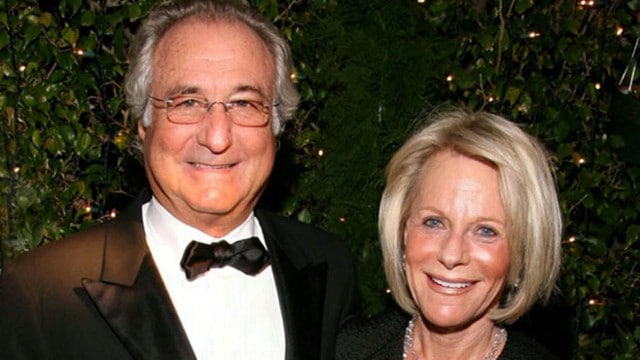
Are You Bernie Madoff?

It’s a tough question to ask, but many of my brave clients have asked it: “Dave, how do we know you are not Bernie Madoff?”
You’ve heard a lot of scary news during your lifetimes, and the thought that some financial advisor could abscond with all of your money is terrifying.
So let’s look at how all of this works.
The investment advisory world is HIGHLY regulated, but also somewhat confusing to the consumer.
I am regulated by three separate authorities:
-The SEC (The Securities and Exchange Commission)
-FINRA (Financial Industry Regulatory Authority)
-The Florida Department of Financial Services
As a fiduciary, my activities are primarily supervised by the SEC.
Wow, this IS really confusing.  Let’s look at this a different way.  Let’s look at how Bernie Madoff got away with his shenanigans and pretty quickly I think you’ll feel better.
When someone signs on with me, we hold the electronic bond and stock certificates at TD Ameritrade.  Put another way, I don’t have your money. A big bank has your money. If you call TD Ameritrade directly they can answer any questions you have about your accounts.
As you can see, there are “checks and balances” in place.  I do not have direct access to your money. The money is not being held at Kennon Financial.  I am not a bank.
The SEC and FINRA closely monitor all activities in my office in Sarasota AND of TD Ameritrade.   If I were to ever have a lien on my property, or claim bankruptcy, or receive a customer complaint, or even get pulled over for DUI, I have to disclose the information to these governing bodies.  Put simply, they do NOT mess around. You can check out any advisor’s history at FINRA Broker Check and SEC Investment Adviser Public Disclosure.
So how did Bernie Madoff get away with it?
It wasn’t overly complicated, and Bernie wasn’t the guy who invented the concept.
You see, in addition to advising people on their finances, Bernie started his own bank.  Starting up a bank/custodian is not illegal in and of itself. But Bernie took things a step further.
At its essence, his crime was simple.  When you worked with Bernie you were signing over your money to the “Bernie Madoff Bank.”  There were no “checks and balances.” The only place to get any information about your money was by calling Bernie:
For Example:
You:  “How are the investments working out, Bernie?”
Bernie:  “Great! Would you like us to send you a current statement?”
You:  “Sure!”
They were faking statements, for YEARS. 
There were no checks and balances.  Bernie had all the control. When the crash hit in 2008, clients were asking for their money and the Bank of Bernie had run dry.   Bernie had spent the money on solid gold toilet seats and penthouse apartments. Then, and only then, did things come to light.
So relax.  You are safe.  Just never write any checks to “Kennon Financial.”  I even have to pay people to supervise my own business.  It may sound strange, but we need to do everything we can to protect the consumer.
Be Blessed,

The Dangers of Downsizing

A lot of Baby Boomers find that the majority of their assets comes in the form of equity in their home. In conversations with me, they say something to the effect of:
“Dave, a big part of our retirement plan is to downsize our house.”
Let’s think about that idea for a second.
Let’s assume:
  • You own a single family house in the area.
  • You enjoy living there. You’ve made it your home.
  • You decide to downsize in order to fund your retirement and lower your budget.
Ok. So now let’s think about your options. Where are you going to move?
  • A smaller, crappier single family home.
  • A townhouse
  • A condo
  • A manufactured home
That’s not to say there aren’t situations where downsizing makes sense. There are. Keep reading and we’ll get there.
But first, let’s assume your house has been your haven for most of your adult life. You love it, but you’re considering downsizing to have more money for retirement.

The downsizing savings myth

For example, let’s say you own a $250,000 single family home with no mortgage.
You decide to move into a townhouse. A decent townhouse will cost you $150,000 at an absolute minimum. Don’t forget about the HOA fees. That could be hundreds a month. And don’t forget about moving costs, paying the realtor a commission, redecorating…..
You now own a $150,000 townhouse which you don’t like as much as your last home, paying a few hundred a month in HOA fees. You find yourself almost exactly where you started. Sure you have $80,000 in the bank (after fees, commissions, closing costs, etc). That $80,000 can produce about $300 a month in dividends and interest. Maybe you are saving a couple hundred dollars a month.
Is it really worth it?
Another example: Let’s say your own a $250,000 single family home with a $100,000 mortgage. You are paying $1300/mo on the mortgage which you’ve had for well over ten years.
You decide to move into a condo. You sell the house, pocket the $135,000 (after commissions) and find the condo of your dreams. Actually, that’s not entirely true. A $135,000 condo is not going to be as nice as the house you just sold.
Now comes the HOA fees. Condos are notorious for high fees, which can change at the drop of a hat. Also, don’t forget, you may get a letter from the condo board that says: “We decided to replace the roof and we’re going to charge you an assessment of $8,000.”
But now you have no mortgage! That saves you $1,300 a month in mortgage payments (minus the HOA of $300). So you now live in a condo that you don’t like as much as your house which needs a ton of work and you have an extra $1,000/mo.
Is it really worth it?
Maybe. It depends on your overall financial situation. Could that $1,000 be saved somewhere else? There are other ways to trim a budget which are much less painful. Remember too that your mortgage will be paid off at your original home if you can stick it out for a few more years.
Another example: Let’s say you own a $200,000 home with no mortgage. You decide to sell your house and move into a manufactured home.
A relatively nice manufactured home will cost you between $50,000 and $100,000. You retain $180,000 after commissions and moving expenses. You put $100,000 toward the home. The manufactured home is on a piece of land that is leased back to you. Lot rents vary but let’s say it is $500 per month.
You now have a new $500 monthly payment but you still have $80,000 in the bank, which will produce around $350 per month in interest and dividends. This seems like another situation where the savings is pretty minimal and you are living in a house you don’t like as much.
Of course there are always caveats to these conversations.

When does it make sense to downsize?

Here are some examples where it might make sense to downsize.
Your current home is too big. 
The kids moved out and you are left with a 3000-square-foot home with a big yard. Downsizing in this situation often makes sense. While you might not save a ton of money, maintenance free smaller town homes can be very attractive.
You plan on a major downsizing. 
Moving from a $400,000 home to a $100,000 manufactured home will create a significant difference in budget and spending needs going forward. Few people like this option.
You have the opportunity to move in with a family member.
This can be especially attractive if your child or relative has an apartment attached to their home, or a mother-in-law suite. This is a fantastic way to lower expenses and increase cash in the bank (not to mention bringing a family together).
You have no other retirement assets. 
This is not ideal, and NOT the situation for most retirees. But, for those folks facing this reality, selling their home and downsizing to a much smaller space can help them live comfortably throughout their retirement.
So before you think that downsizing could fix all your retirement worries, really consider the long term financial ramifications. Do the math. Consider the emotional consequences of moving. And move ahead with caution.
Be Blessed

Monday, June 24, 2019

Thoughts that Could Wreck a Third of Your Life

Thoughts that Could Wreck a Third of Your Life

They say you can’t take it with you when you go, but according to a study from the Federal Reserve, a lot of people are trying to.
The study pointed out a mind-blowing statistic: Folks in their 60s have more money than those in their 50s. The same is true for people in their 70s versus in their 60s. And those in their 80s … yep, more than when they’re in their 70s. (source) Of course not everyone experiences this phenomenon, but millions of Baby Boomers do.
What does it mean? It means people are continuing to save aggressively throughout retirement, rather than switching over to spending more of it later in life.
What’s more interesting is why people do this. It’s a mindset based in anxiety, uncertainty, and fear. If any of these common thoughts sound like something you’re saying to yourself, consider this your wake-up call.
Bob Lewis thinks: “Sure, I’ve saved up $500,000 for retirement. But I better not spend any of that money unless I absolutely HAVE TO. You just never know what might happen.”
True, you never know what might happen. But what might happen is not what is likely to happen. Don’t live your life in fear of an unlikely catastrophe.
Andy Babcock thinks: “What happens if I have to go to a nursing home?! What happens if I need a major surgery?! If I spend any of this money, I might end up living in a van down by the river, eating from garbage cans, and playing cards with hobos.”
The Medicare maximum out-of-pocket in any given year is $6700. A hospital stay is not going to bankrupt you. The chances of you needing to be in a nursing home for more than 5 years is in the single digits.
Betsy N. thinks: “My parents always taught me: “Never stop saving. Never spoil yourself. Be financially conservative. Never spend any money unless you absolutely HAVE TO. If you start spending too much money, you may end up living on the streets.”
Your parents lived through the Great Depression, the worst possible economic crash of our country. They have every right to be conservative about money. But, here’s the good news: Historically, for every stock market downturn in the last century, the stock market has recovered and then some.
Jackie Dempsey thinks: “I’ve been working with a financial planner for years and he has never even mentioned actually spending some of this money. All he talks about is bonds and stocks and P/E ratios. Honestly, I don’t understand much of what he says, but he is the professional. I think if I understood this more, I might feel better.”
If you don’t understand your retirement investment plan, then it isn’t a plan. Ask questions. Ask follow-up questions. And if you don’t get what you need from your advisor, start looking for a new one.
Karen Schwartzbaugh’s thoughts: “My neighbor just told me about his parents who are running out of money! They lived longer than they thought they would. They just up and ran out of money. I am so scared that might happen to me.”
You can feel sympathy for the people in this situation while still recognizing that isn’t going to happen to YOU. You are going to make a budget, know exactly how much you can safely spend each month, and live an awesome retirement.
Whitney Crabapple thinks: “I saw on the internet yesterday that some Wall St. guy is predicting the stock market is going to crash by 80%. I hate this! Why does life have to be so scary! I guess I’ll have to cancel that cruise. I can’t be running around spending all this money when the economy is about to collapse.”
Whitney and Betsy should have brunch. See above. The stock market fluctuates, but if you look at the data, it always recovers in favor of the long-term investor. Also, stop listening to Wall St. guys.
Bob P. thinks: “Sure, I wish I had spent more money and checked off more boxes from my bucket list. But I just turned 80. I don’t have the energy anymore. I guess I don’t need to worry about running out of money, but at this point in my life, there isn’t all that much I even want to spend the money on.”
Oh, Bob. What about your grandkids? Your church? A charity you believe in? Don’t give up on your ability to make a difference and feel good about how you used your money.  No one will ever steward your money better than you.  Don’t let your heirs decide what the money is for.
Maria Tran thinks: “Sure, I wish we got to do more fun stuff, but you can’t be irresponsible. I have spent my entire life building up responsible spending habits. I’m certainly not changing now. I’m going to continue to cut coupons, eat the early bird specials, and buy generic cereal. I don’t care if I have the money to spend. It just doesn’t feel right to do so.”
You’re not being irresponsible. In fact, you’ve spent your entire working life being responsible. Now, you can be responsible AND have fun. Make a retirement plan that allows you to safely spend the money your investments are making.
Dave’s Conclusion: If you’ve had some of these same thoughts (and I know you have), you’re walking around with a few misconceptions in your head that could short-change your retired years. Don’t live scared. Don’t die rich.
Remember the central tenets to The Retirement Revolution.
-Get educated. There is no better way than to read my weekly commentaries.
-Put together a responsible plan that outlines your budget needs and sources of income once retired.
-Invest your money in a diversified portfolio of stocks and bonds with at least half of the money in stocks.
-Turn off the financial news and stop checking your portfolio every day.
-Start spending 5% of your retirement savings the very first year of retirement.
-History shows, with remarkable consistency, that your money will last. Focus on living your new retired life with a sense of empowerment and confidence.
Be Blessed,
Dave