Tuesday, May 31, 2022

Buying a CD with a -7% Interest Rate


Buying a CD with a -7% Interest Rate

Family Update


My wife grew up around family that loves fishing.  Her oldest brother, in particular, would fish all day every day if he could. 

We found a fishing good spot on the shore, and the family has been trying to catch a keeper ever since.  Up to this point we’ve caught mangrove snapper, snook, catfish, and sheepshead.  In my opinion, the snapper is the tastiest.   

Below you can see Grandpa helping the kids bait hooks and release fish.  He barely has any time to fish himself.  Lines keep getting tangled and hooks get stuck on rocks underwater.  

You might also notice a pelican waiting patiently.


Dawn was a nurse for an OBGYN doctor. The stock market keeps going down, she thought. It seems like every time I put my money into my 401k it just disappears. I had $100,000 in the account, then I added $5,000 and now it is worth $95,000. Why would I keep putting money toward retirement when all my contributions get lost in the market? I’m going to stop putting money into my 401k.  

Dave’s Take: Huge mistake! If anything she should be increasing her contributions. Nobody can predict the movements of the market but we certainly are not at the top of the market. Keep saving! You’re buying low. 

Next up . . .  

Jack, a retired engineer, was studying his portfolio. These accounts have lost $50,000 this year. This is all we have. If this portfolio runs out, I don’t know what I would do. I am going to cash out and wait for the markets to stabilize. It feels like if I don’t do something I’m going to lose all of my money. 

With his money on the sidelines, Jack very quickly realized how hard it is to re-invest money once you’ve sold low. Jack watched as the markets went lower. He felt pretty smart. But then they started creeping back up.  

Not quite yet, Jack thought to himself. The economy still seems fragile. The markets may have rebounded back to their original levels, but at least I didn’t lose any money. I guess I missed out on all those gains, but there is no way I’m going to invest now. The market is at an all-time high. I’ll wait until the market goes down again… 

Dave’s Take: Many people fall into the same trap as Jack at some point in their investing lives. They sell low and wait for things to “settle.” Before they know it, it is a year later, and the markets have fully rebounded and you’re still on the sidelines.  

Next up . . .  

Bobby was incredibly stressed about his investments. He didn’t really have anyone around to help him navigate the choppy waters. As soon as the account was down 20% he threw in the towel. He thought, I am done with this. I swear I’m never going to invest again. I’m too old anyway. So Bobby went ahead and put his money in CDs. 

Dave’s Take: Bobby’s financial situation is going to get crushed by inflation. Remember, you can temporarily lose money in the stock market, but by putting your money in low-interest-bearing instruments, you are guaranteed to lose purchasing power.  

Next up…

 George saw his account values going down and it was making him sick. One day he heard on the radio about software that would help him day trade. It proclaimed, “CenterPoint Securities is a great place to trade because it offers direct access to all the assets you could want. The platform offers several helpful features like: advanced charting, level 2 order routing, short inventory access, capacity for advanced and high-volume traders, built-in scanners, custom alerts, and advanced order entry.” 

George, while having no idea what all those words meant, was excited and, after paying the hefty subscription fee, started trading stocks several times a day. Not only did he trigger all kinds of unnecessary taxation, but his money went down even faster.

 I thought these guys knew how to make money in any market conditions, George grumbled.  

Dave’s Take: All of these software programs are garbage.  All of them.  

Next up . . . 

Joey and Jan had been looking forward to a trip to Europe. COVID has really put a damper on their plans. By the time travel started up again, Joey and Jan watched their portfolios falter. “We can’t take this trip,” Jan said, “Our portfolio is almost 20% less than a year ago. It’s time to buy toilet paper in bulk, only eat Ramen noodles, start cutting our own hair, keep the air conditioning at 80 degrees, sell one of our cars, and cancel our trip to see the kids up in Minnesota.”

 Dave’s Take: This is just sad. As far as their financial plan went, nothing has changed. Economies expand and compress. The compression happens much more quickly than the expansion. It’s worked that way for hundreds of years. 20% moves in the market are very common.  

Two years ago, due to COVID, the markets lost 34%. It’s easy to forget. 

In 2018 the market fell 20%, at one point during the year. Do you remember that? Probably not. 

In 2015 there was a short-lived market selloff with the markets dropping by 15%. 

In 2011 the markets dropped by 20% but fully recovered by the end of the year. I guarantee you don’t remember that one. 

All of this to say: Looking back on 2022 we will remember rampant inflation but there is a good chance that the market correction will be long forgotten. 

 Lastly . . .  

Doug and Amy were looking at their iPads one morning in the kitchen. On TV they saw a hysterical “investment guru” talking about how the sky was falling. Doug said, “These yahoos are basically guessing. If this guy could consistently predict the ups and downs of the markets, he would be the first one in modern history to do so.” 

Amy piped in, “If he’s so smart why is he not living on his own tropical island with investors lining up, begging him to help?” 

“It’s all theater,” Doug replied.  

Be Blessed,

Dave

Monday, May 16, 2022

This Time It’s Different


This Time It’s Different

Family Update

Our dog is half Golder retriever and half miniature poodle. We never saw him swim before, so we decided it was time to try it out. We threw him in the pool, not knowing what to expect. He loved it!
We had a great Mother’s Day at the beach. She was able to hang out with our kids and a few cousins stopped by as well. We fished for Mangrove Snapper, cracked open coconuts lying on the beach, and played in the sand. We truly live in paradise.
I would prefer it if everyone else in this country never finds out. I think it might be too late.

I’ve had quite a number of you reach out concerned about the state of the country and the world. I can talk most of them off the cliff, but many still say:

“Ok Dave, I know investing worked in the past, but this time it’s different.”

Sir John Templeton was an extremely successful investor, banker, fund manager, and philanthropist. Having lived until ninety-six, he personally experienced nearly a hundred years of the ups and downs of the markets.

After all those years, he famously said:

“The four most dangerous words in investing are: this time it’s different.”

I’ll show you what I mean through a few colorful anecdotes.

Robert Pinochle

The year was 1930. Robert Pincohle had $10,000 invested in the stock market. (A lot of money in 1930.) Robert thought to himself, “We are in the middle of the worst economic downturn this country has ever seen.” He was right about that, but what he did next was a mistake. He thought, “This time is different. The markets are dangerous.” Robert took all of his money in cash and buried it in his backyard. Ten years later, in 1940, his $10,000, had he had kept it in the stock market, would have been worth $11,925.

John Canterbury

The year was 1940. John Canterbury had $10,000 invested in the stock market. He thought to himself, “We are in the middle of another World War. Countries are collapsing! The economic predictions are dire. Government debt is at an all-time high. This time is different!” John took the money in cash and stored it under the bed in his wife’s best Tupperware. Ten years later in 1950, his $10,000, had he kept it in the stock market, would have been worth $35,035. And his wife wouldn’t have had to re-buy all those containers!

Earl Pickett

The year was 1950. Earl Pickett had $10,000 invested in the stock market. He thought to himself, “The Communists have infiltrated our government. I’m pretty sure my neighbor Bob is a Commie. A Communist takeover spells disaster for our country, and the market. This time is different.” Earl took the money in cash and hid it in his collection of Elvis Presley nesting dolls. Ten years later in 1960, his $10,000, if he had kept it in the stock market, was worth $44,694.

Paul Kowalski

The year was 1960. Paul Kowalski had $10,000 invested in the stock market. He thought to himself, “The stock market has been going up for nearly 20 years. We are due for a crash. This time is different.” Paul took the money in cash and hid it in the stuffing of his Day-Glo orange beanbag chair. Guess what? Ten years later in 1970, his $10,000, had he kept it in the stock market, would have been worth $21,959.

David Malkin

The year was 1970. David Malkin had $10,000 invested in the stock market. He thought to himself, “This country is falling apart. Vietnam. Oil embargoes. Hippies. This time is different.” David took the money in cash and buried it in his backyard, putting his Pet Rock on top to guard it. Ten years later in 1980, his $10,000 would have been worth $22,555 … if he’d kept it in the stock market. Bummer, man.

Tom Chadwick

The year was 1980. Tom Chadwick had $10,000 invested in the stock market. He thought to himself, “The Cold War menace is looming. Nuclear tensions are at an all-time high. Russian paratroopers could descend from the skies at any time. This time is different.” Tom took the money in cash and buried it in his backyard. Ten years later in 1990, his $10,000, had he kept it in the stock market, was worth $36,813.

Wolfgang Applebottom

The year was 1990. Wolfgang Applebottom had $10,000 invested in the stock market. He thought to himself, “Saddam Hussein has us on the brink of war. Stocks are overvalued. We haven’t had a significant recession since the early 70s. This time is different. The markets are dangerous.” Wolfgang took the money in cash and stuffed it into his wife’s collection of Beanie Babies. Ten years later in 2000, his $10,000, had he kept it in the stock market, was worth $49,907. Worse, his wife’s McDonald’s International Beanie Bear would have been worth $10,000, except Wolfgang tore all the stuffing out to hide his cash.

Bobby Bickleberry

The year was 2000. Bobby Bickleberry had $10,000 invested in the stock market. He thought to himself, “The tech bubble is bursting. I’m hearing rumors of a long-term recession. This time is different. The markets are dangerous.” Bobby took the money in cash and stored it in a safety deposit box at the bank. Ten years later in 2010, his $10,000, had he had kept it in the stock market, would have been worth $11,500 (after two of the worst bear markets in U.S. economic history).

Derek Johansen

The year was 2010. Derek Johansen had $10,000 invested in the stock market. He thought to himself, “We just experienced a decade with two historically awful recessions. I am spooked. No more investing for me!” Derek took the money in cash and locked it in a fire-proof safe, which he kept in his closet. Nine years later in 2019, his $10,000, had he had kept it in the stock market, would have been worth $32,016.

Maybe this time isn’t different. Maybe it’s time to embrace a financial vehicle that has an almost uninterrupted string of success for decades. Markets temporarily go down and permanently go up.

Be Blessed,

Dave

Share this Post:

Monday, May 9, 2022

This is the Moment of Truth


This is the Moment of Truth

Family Update

We took the puppy to the beach and he loved it.  My wife is a beach fanatic, and now she has a little friend to share it with.  I just get hot and crabby.

He actually got in the water and came out looking like a sandy, drowned rat.  His fur is so poofy you forget that there is a little puppy body underneath.

Some tension has developed in the household.  Everyone wants the cats to sleep in their room. They are so affectionate.  They lick your face like a dog.  I’ve heard people say that a rag doll cat is a puppy in a cat’s body.


Dave Lennon, a financial advisor, sat down with his morning coffee to peruse the news. Hmmm, he thought, the markets were down again yesterday. The S&P is down over 10% this year. I sure hope my clients aren’t worrying.  


As soon as he got to the office, several messages were lying on his desk. Dave thought to himself, it looks like some people need some reassurance. I can understand why. It’s no fun to see your account value go down. A lot of people’s accounts have grown so much in the last year, that a loss of 10% is a huge number.  


Saying “‘l lost $100,000’ sounds a lot worse than ‘I lost ten percent’” he thought to himself.


So he made his first call. 


“Hi Nancy,” Dave said. “I have a message here that says you need to talk.”


“Thanks for getting back to me so quickly,” she replied. “I read all your emails and I read your book, but I just can’t handle this. I don’t have time for the account to go back up.”


“What do you mean?” Dave asked. “ You are only sixty-five. You have plenty of time to make it up. A ‘correction’ means that the market has dropped by 10-20%. This happens once every two years or so. Nothing out of the ordinary at all. We’ve become used to our investments going up and up month after month over the past few years. It usually doesn’t work that way.”


“I can point you to all kinds of history,” Dave said. “But the bottom line is: volatility happens. The markets temporarily go down but permanently go up.”


Nancy wasn’t convinced. “What about the situation in Russia? What about inflation? These are unprecedented times.”


Dave looked Nancy in the eyes. “Nancy,” he said. “This is the moment of truth. These are the times many people make poor, emotionally charged, decisions. For our plan to work over the long term you can’t panic.”


Dave continued, “If between now and the end of your life the stock market does not return around 10% it would be the first time in economic history.”


I really feel for Nancy, Dave thought to himself.  I can feel the anxiety in her voice. It is so upsetting to me. Retirees should not have to deal with this kind of stress. How can I convince her to ignore both her statements and investment returns?  


“Nancy, I have a story for you,” Dave said.  


“The year is 1995 and you retire with $100,000 to invest. With that $100,000, you place 30 percent in bonds and 70 percent in stocks. You then decide to start taking out $5,000 a year from your $100,000 investment.


You decide to go live on a secluded island in the Caribbean. The island you choose has no internet, TV, radio, or newspapers. In fact, you have absolutely no idea what is happening in the outside world.


For 25 years you stay there, enjoying your tropical ‘off-the-grid’ lifestyle. The only connection you have to the outside world is that each year $5,000 shows up in your Bahamian bank account from your initial $100,000 investment.


In July of 2021, you return to the United States for the first time in 25 years. I am using this specific time period on purpose. In hindsight, those were a rough 25 years in the economy.

Remember, in this time-traveling example, you have no idea what is happening to the world economy. You don’t know that the market crashed in 2001 due to an internet bubble. You don’t know that 2008 experienced one of the worst economic disasters in history.


You have never once looked at a financial statement. All you know is that over the past 25 years you have received $5,000 each year for a total of $125,000 from your investments.


You go online to check your investment account. You are more than a little nervous. Is there any money left? Your hand trembles as it clicks on the “login” button. What is the account balance remaining? Are you broke?! Should you have been keeping an eye on your portfolio, obsessively checking the stock ticker every hour over the past 25 years?


The remaining balance is $415,000


You started with $100,000. Took out $125,000. Now, you have $415,000”.


Nancy replied, “Dave, are you actually telling me I don’t have to be hyper-vigilant with my accounts? Are you saying that staying on top of my investments is unnecessary? Are you saying that I should put a good plan in place and then trust the process? Are you saying I don’t need to worry at all?”


“Yes. The ups and downs of the stock market mean absolutely nothing. In a year or two, this will just be a small blip on the radar.”


“Thank you for the reassurance. I don’t what I would do without someone like you keeping me in line,” Nancy laughed.


Dave watched Nancy leave the office. I have the best job in the world, he thought. All day, every day I get to give people peace of mind. 


It’s time to return the next call. I am on a mission to ensure that none of my clients are going to make emotional decisions. They are going to reap the reward of long-term disciplined planning and investing. 


Be Blessed,


Dave


P.S. It would mean so much to me if you share this article on Facebook.  A lot of your friends need encouragement.  Don’t let them worry for no reason. 

Monday, May 2, 2022

You Are Just Giving Back Some Gains


You Are Just Giving Back Some Gains

Family Update

We were told that our mini golden doodle would weigh twenty pounds. He’s already thirteen pounds and he’s only four months old. How do you get a dog to stop growing? He’s the perfect cuddling size right now.

The pets really add so much life and excitement to the house. We have one older cat who is having a terrible time adjusting to the new creatures. All she does is hiss and run away. The new pets are so docile. If anyone knows how to get the old cat to accept her new housemates, let me know.

Desmond delivers the paper to our neighbors each day.  What a nice dog.


Louie, peering at his computer screen, let out a big sigh.


“What’s wrong, honey?” His wife, Petunia, asked.


“It seems like every time I look at our investment accounts the values are going down,” he replied. “I was looking online and the S&P 500 (the 500 largest U.S.companies) is down over 12% year to date.”


Petunia was now alarmed. “Louie, we are too old to lose any money. We need this money to live on. Let’s call our financial advisor, Dave.”


When they got Dave on the phone, Louie explained their concern.


“We were just getting worried about the drop in the markets this year,” Louie said. “I figure you are going to say ‘stay the course’, but I’m still scared. My one million dollar account is down $100,000 dollars this year!”


Dave listened patiently, then said, “The markets are a little down so far this year. Let me ask you something. What did the stock market return last year?”


“I can’t remember,” Louie said.


“It was up over 28%,” Dave replied.


“Wow. That much?” Louie said.


“Your account grew from $780,000 to one million,” Dave said. “Do you remember how the stock market did in 2020? It was up 18%. Your account has grown from $600,000 to a million in two years. Now the account is down from one million to $900,000.”


“What’s your point?” Louie inquired.


“Louie, you have only lost a portion of your gains,” Dave replied. “Even with this year’s losses, your account is up to $280,000 over the past two years. I know it is easy to forget what these accounts did. Everyone remembers when the market goes down, and only a few people remember when it went up.”


Here’s an example to illustrate Dave’s point.


Let’s say you retired in 1995 with $100,000. In 2000, 2001, and 2002 the markets went down a total of 40%. This was due to the dot.com bubble. Let’s look at what happened.


In 1995 your portfolio would have grown by +37.2%

1996 +22.68%

1997 +33.1%

1998 +28.35%

1999 +20.89%

2000 -9%

2001 -11.85%

2002 -22%


So what am I getting at? That $100,000 you invested in 1995 would have grown to $210,800 by the end of 2002. That was in the depths of the market correction. Do clients of mine say, “We doubled our money in ten years? That’s great!”


No, none of them do.


They only remember when their account was at its peak, and then every loss from that high point is painful. All they were doing was giving back some of the gains. Certainly not all of them.


After Dave shared this example, Louie said, “I never thought about it that way. I think you’ve made us feel better. I guess we are just temporarily giving back some of the gains. It’s still no fun.”


“I know. It’s not, but the portfolio we are utilizing is designed specifically for times like these.”


Petunia piped up. “Dave, what about all the craziness in the world right now? The markets have to keep going down, right?”


“I have no idea. The market is completely illogical. I know it is frustrating, but stock market returns have very little to do with what is happening in the world.


For example, when Covid first hit in the spring of 2020, the markets dropped around 20%. That makes perfect sense, right? The whole world was shut down and millions of people were expected to die.


But after the 20% drop, the markets began to climb and climb and climb. They grew to all-time highs. Completely illogical. If you try to time the market using logic you are going to fail every time.”


“I guess I knew you were going to say all this,” Louie said sheepishly.


“Don’t worry. It’s my job to keep you on track. I am more than happy to help,” Dave replied.


Louie and Petunia got off the phone, relieved.


In his office, Dave pulled up his news feed. On the front page of CNN’s website was an article entitled, “A major recession is coming, Deutsche Bank warns.”


Dave banged his head on his desk a few times. The phone rang and Dave answered, ready to remind another client they were on the right track.


Be Blessed,


Dave


Monday, April 25, 2022

Your Home Shot Up in Value. Now What?


Your Home Shot Up in Value. Now What?

Family Update


Our family just keeps getting bigger. My wife has three siblings, all of whom live locally, who have a total of eight kids. Now some of their kids are bringing dates. We had thirty people on Easter. 

That’s a lot of ham! 

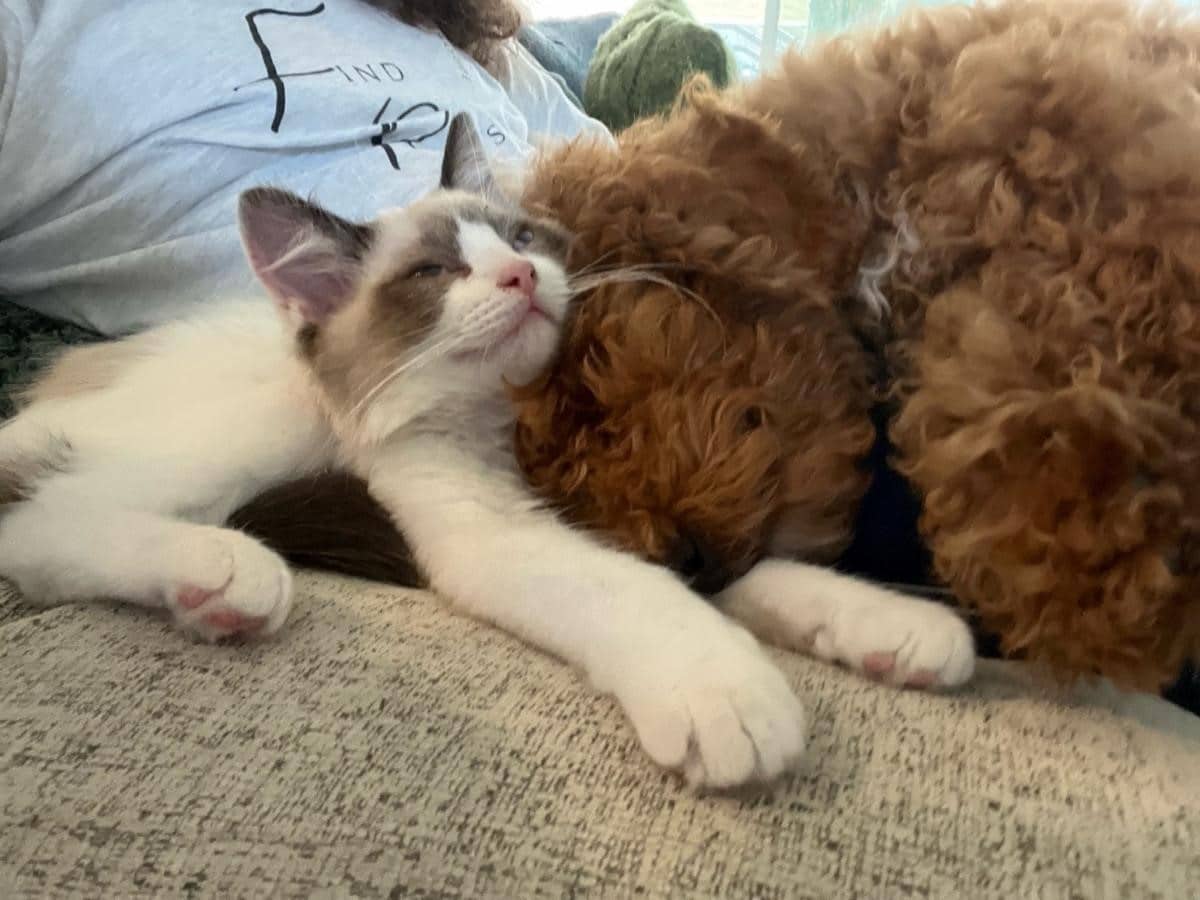
The kittens and dog are becoming good friends. Desmond the puppy plays really rough with them, even picking them up by the scruff of their necks. 

But I guess they don’t mind. See the picture.


Jimmy and Roberta Miller, recently retired, were having coffee on their lanai. The house next door had a “For Sale” sign in the front yard; their neighbors were moving up to North Carolina to be closer to the kids.


“They are asking $500,000 for that place!” Roberta said in amazement. “These houses were selling for $300,000 last year. What is happening?”


Jimmy responded, “If you suddenly realized that you could work from home, anywhere in the country, why would you stay in Buffalo or North Dakota or Omaha?”


“Good point,” Roberta said.


“We own this house free and clear. It’s more updated than the neighbors and we have a better lot. I bet we could get $500,000 easily,” Roberta said. “There are so many things we could do with that money. We are 65 years old. I imagine that over the next ten years we will spend a lot of money on fun things that we’ve worked for. How do we get access to that money?”


“We could downsize to a smaller place. It would be a shame though, we have this house just the way we want it. Not to mention that townhome and condo prices are going through the roof as well,” Jimmy said.


“I agree,” Jimmy said, nodding.


“Your buddy Nick used to be a banker, right?” Roberta asked. ‘Why don’t you ask him what we should do.”


Jimmy called up Nick and explained his situation.


Nick told him, “Jimmy, you really have three options. You can get a home equity line of credit, a cash-out refinance, or a reverse mortgage.”


“Can you explain the pros and cons?” Jimmy asked.


“Sure thing,” Nick replied.


Nick went over their options.


1. They could get a home equity line of credit.


Most banks are willing to open a line of credit up to 80% of your loan to value (LTV). Since their house is worth $500,000, they could open a line of credit for around $400,000 (80% of $500,000).


The money can be used for anything. Maybe they want to do home renovations or pay off credit card debt. Once the credit line is open, the Millers don’t need to take out any money if they don’t want to.


Once they do, they will need to start making payments. Most HELOCs give an “interest-only” option. The Millers don’t need to pay down the principal of the loan. They only have to pay the interest.


The interest is based on the prime rate. Usually, the terms of the loans say something like: Your interest rate is prime + 1%. The prime rate is an interest rate determined by individual banks. It is often used as a reference rate (also called the base rate) for many types of loans.


The prime rate is currently 3.5%, so if the Millers got a HELOC with a prime + 1.25% loan, the interest rate would be 4.75%.


“You need to be careful with HELOCs, though,” said Nick. “Most utilize variable rates. This means that if the prime rate increases, your interest rate increases. Just for a point of reference, in 2007, the prime rate was 7.5%.


“And remember that if you don’t make your HELOC payments, the bank has the option of foreclosing on your home.”


2. They could do a cash-out refinance.


This simply means that they get a new mortgage on the home. Generally, a homeowner can get 80% of the equity from the property. So if Jimmy and Roberta refinanced their home, they would need to get a mortgage on the $400,000 (80% of their equity).


Now they are paying on a $400,000 mortgage which in today’s rate environment would cost about $2,000 a month.


So, in this example, Jimmy and Roberta took $400,000 of tax-free cash in their bank account and started paying $2,000 a month on their new mortgage.


Nick explained, “This can be a powerful way to get money out of your home. Usually, whenever one of my clients dies, the kids get the house, sell it, and split the proceeds. Do you care if your kids get a fully paid-off house, or would you rather enjoy that money/equity while you’re alive?”


Of course, the Millers would now have a mortgage again. Many people don’t like that idea at all. But it can make sense for some.


Another complicating factor is that interest rates are rising. So they would be getting a loan with an interest rate of 5% or more.


3. They could get a reverse mortgage.


Nick went on, “When I say “reverse mortgages” to people, I get very emotional reactions. People sitting across the desk from me cross their arms and proclaim, ‘There is no way I would ever do that. It is a scam and I could lose my house!’


“The truth is, reverse mortgages are backed by the federal government. They’ve gotten a bad name, but they are definitely something you may want to consider.”


In Jimmy and Roberta’s situation, the reverse mortgage bank might offer a $300,000 payout. They would then have a $300,000 debt that they never need to pay back. 


The debt keeps growing because the reverse mortgage bank is charging an interest rate. When the Millers die or sell the home, they (or their kids) pay what is owed, and pocket the rest. If the home is worth less than the loan, it’s not their problem. The bank will have to eat the loss.


“Is the money I get from the reverse mortgage taxed?” Jimmy asked.


“No,” said Nick.


“Can the bank cancel the loan and ask for all the money back?”


Again, the answer was no.


“Can I get a reverse mortgage if I still have a mortgage on my home?”


“Yes.”


“How much will the bank give us? How do they determine the payout?” Jimmy asked.


“It mostly depends on your age,” explained Nick. “One spouse must be at least 62 years old.”


Jimmy and Roberta hung up the phone. “I guess we have a lot of options,” Roberta said. “Has there ever been a time in the history of real estate where properties doubled or tripled in value in less than a year? I’m glad we’re not moving down here to buy a house right now!”


Be Blessed,


Dave


Monday, April 18, 2022

Spending Money in a Volatile Economy


Spending Money in a Volatile Economy

Family Update

We named our big kitten “Hemi,” because he purrs so loud it sounds like a Hemi engine. He likes to plop next to your head in the middle of the night, and wake you with what sounds like a running motor.

My two middle boys adore this cat. My normally quiet and aloof teenage son turns into a little kid rolling around with his big fluff ball.

It’s funny how some people are dog people and some are cat people. My youngest and oldest love the dog and ignore the cats, and my middle two love the cats and get annoyed with the dog.

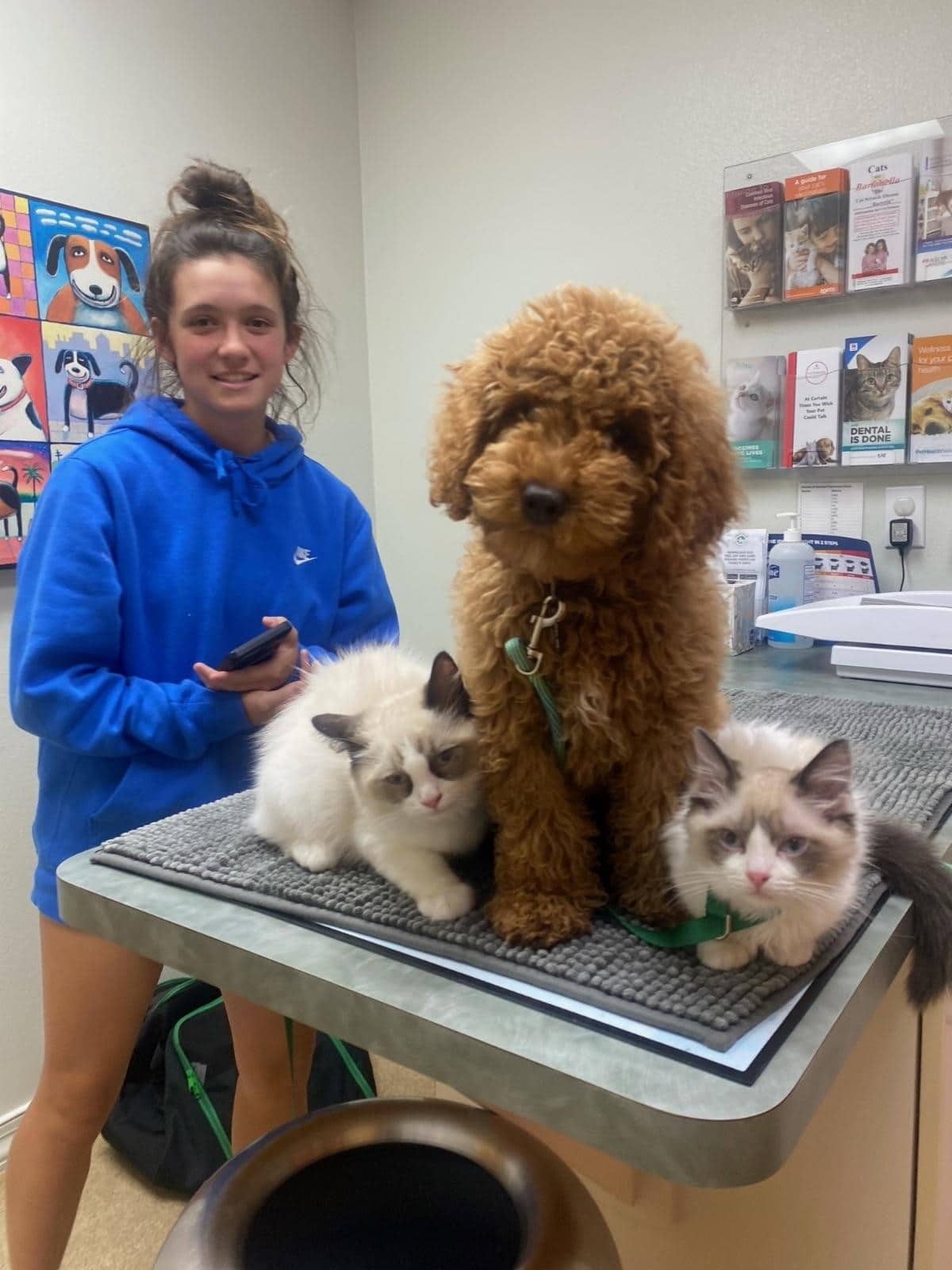
Below is the most recent trip to the vet. Senay is such a good helper!


John and Eileen, recently retired, sat at the kitchen table reading a newspaper. They had met with me a couple of months earlier. Per the plan we had put together, they started taking out the gains their retirement investment made.


John looked up from his newspaper and said, “Dave told us that he is sending us 5 percent of the portfolio value every year. Since we have $800,000 in savings, that’s $3,300 a month from the account. I’m so glad we met with him. Now we have a financial plan. The only money that we are spending is the money that the investments are making. Since we are only spending the earnings, it’s a sustainable long-term plan.”


“I agree!” said Eileen happily. “It is so nice to have permission to spend some of our savings.”


A few months passed by and the markets showed consistent growth. Not only were John and Eileen getting $3,300 a month, but the account was actually growing above and beyond the original value.


“This is great!” exclaimed Eileen. “I never considered this money would grow during our retired years. Dave was completely right. It is ok to start enjoying our hard-earned money.”


For a couple of years, the plan worked perfectly. The markets were performing well. Getting that check each month with the value continuing to rise almost seemed magical.


Then, the markets started faltering. John and Eileen began to see their portfolio value erode away.


“This is crazy,” Eileen said, “We can’t be spending money with the economy so uncertain. It’s irresponsible to take money out of an investment account when the value is down. Isn’t that ‘buying high and selling low?’”


“You’re right,” John said. “Shouldn’t we just stop the monthly distribution check? I would rather die than run out of money in retirement!”


“Hold on there, John. Getting upset and agitated isn’t going to help anything. Let’s call Dave and see what he says” Eileen said.


And this is what I tell them, and every retiree who calls me with this worry when the market has a little (or big) wobble.


This story is common to retirees. Usually, the fear and uncertainty you feel are based on a lack of historical perspective.


The first common misunderstanding is the total focus on securities/stocks. You don’t have all of your money in stocks. Diversified portfolios contain both stocks and bonds. Remember, generally speaking, whenever stocks go down bonds go up.


In 2008, during the housing crisis, the stock market went down by -36.55%. A portfolio of U.S. Treasury Bonds increased by +20.1%.


Whenever the stock market is faltering, you simply take your monthly distributions from the bond portion of the portfolio. Having a balanced and diversified portfolio gives you the flexibility to take money from what is performing well at the time.


This is a powerful tool against stock market cycles. For those of you who are clients of mine, while you probably don’t realize it, I’m sending you money from assets that are performing well. If the stock market is way down, you are getting your distribution check from the bond side of the portfolio.


The 5% you get each year is an average.


Let’s say you retired in 2005 and put $100,000 into the stock market. Three years into your retirement, you witnessed your account value plummet due to the housing bubble. But you still faithfully spent your 5% income check each month.


Ten years later in 2015, your account, after taking your 5% per year, would have still grown to $121,539. Just imagine if you spent those ten years completely ignoring your investments. It would have saved you a ton of heartburn.


If you had actually obsessively followed the markets, in 2009 your account would have temporarily dropped to $80,000. It is essential to understand that markets go up and down but overall they go up. Taking out 5% has worked every time for 90 years.


Let’s get really crazy. What happened if you invested $100,000 in 1935? Over the next ten years, World War II would come and go. Taking 5% of your portfolio each year would have been crazy, right? We were at war for goodness sake.


If you started with $100,000 in 1935 and withdrew $5,000 per year for ten years your remaining balance would have been in 1945 <drum roll please> $164,523.


Maybe this is a more simple way to explain this strategy. If between now and the end of your life, a balanced and diversified portfolio of stocks and bonds does not average 5% it would be the first time in economic history.


That’s true for our fictional friends John and Eileen, and it’s true for you too.


Don’t feel strange when you are spending money from an account that is going down in value. It is all part of the plan. There will be good times and there will be bad times. A well-designed portfolio and plan will allow you to spend the appropriate amount without fear.


Be Blessed,


Dave